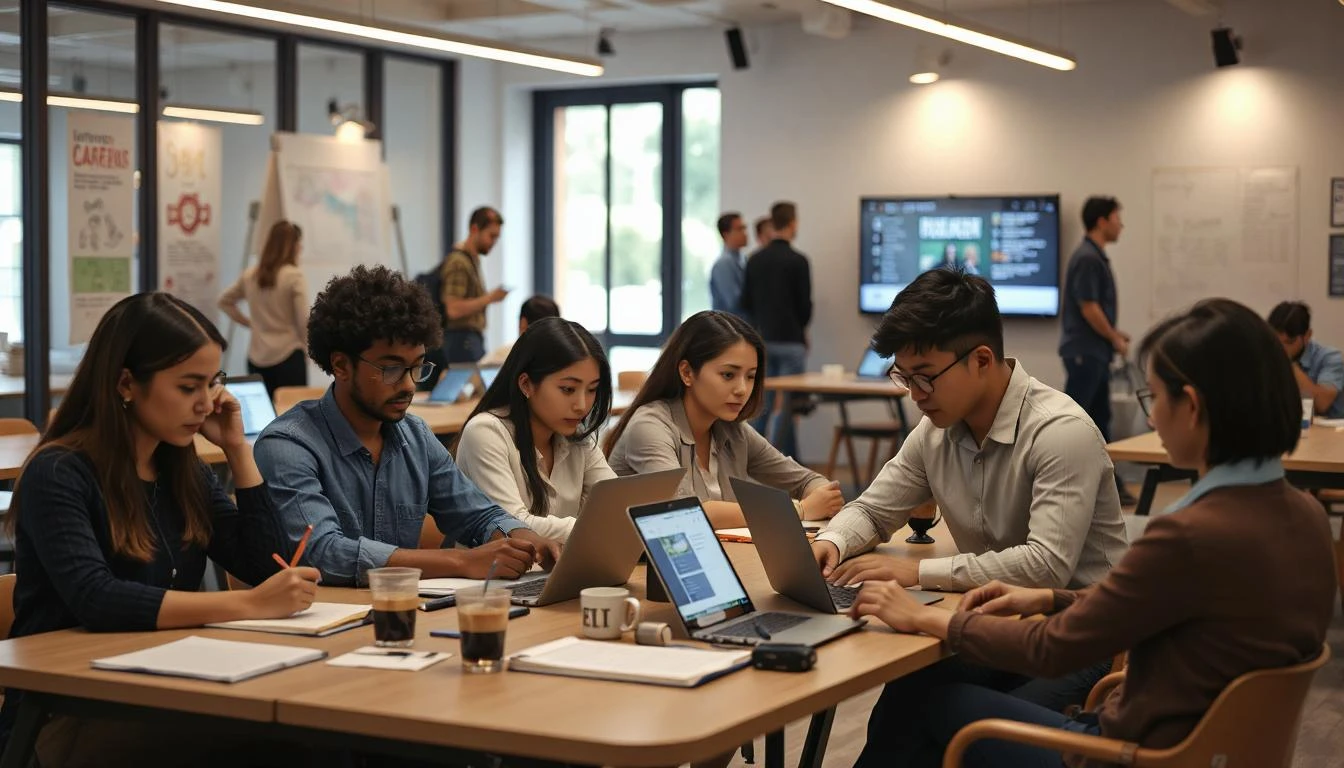
Essential Student Skills For Careers

The competition in today’s professional world is no longer limited to academic scores or impressive certificates. Companies across the globe are searching for students who can think critically, communicate naturally, adapt quickly, and collaborate effectively in fast-changing environments. A diploma may open the first door, but practical abilities often determine who continues moving forward and who gets left behind. That reality makes career preparation more important than ever for students of every age.
In a rapidly evolving digital era, mastering student skills careers has become one of the smartest investments young people can make for their future. Employers are paying closer attention to problem-solving abilities, emotional intelligence, leadership potential, and adaptability instead of relying only on technical knowledge. As education systems continue shifting toward real-world readiness, students who actively build practical skills early tend to stand out faster in internships, remote work opportunities, and professional careers.
Importance of Career Skills for Students
The transition from education into the professional world can feel exciting, but it can also become overwhelming for students who are unprepared for workplace expectations. That is why career-focused abilities are no longer considered optional. They have become essential tools for surviving and thriving in competitive industries where adaptability matters as much as intelligence.
Modern employers increasingly value workplace skills for students because these abilities directly influence communication, productivity, teamwork, and long-term growth. Students who learn how to navigate responsibilities early often develop stronger confidence and better decision-making habits before entering the workforce full-time.
Preparing for future professional challenges
The future of work is changing faster than many students realize. Automation, artificial intelligence, hybrid work systems, and global collaboration are reshaping industries every single year. Students who prepare early for these transformations usually adapt more smoothly when facing real professional challenges later.
Developing practical experience through internships, freelance projects, volunteering, or student organizations can help students understand how professional environments actually operate. These experiences build resilience and improve decision-making under pressure. Leadership expert Simon Sinek once explained that “people perform at their best when they understand their purpose, and that idea becomes especially relevant when students begin preparing for meaningful careers rather than simply chasing grades.”
Building confidence in the workplace
Confidence is often the invisible factor behind professional success. Students who can express ideas clearly, contribute during discussions, and interact comfortably with others tend to leave stronger impressions in both academic and workplace environments.
This confidence usually develops through repeated exposure to challenging situations. Presentations, group discussions, networking opportunities, and collaborative projects can slowly train students to become more comfortable speaking up and sharing ideas. Over time, these habits create stronger communication patterns that employers genuinely value. Students who develop confidence early also tend to handle interviews more naturally. Instead of sounding rehearsed or uncertain, they communicate with clarity and professionalism, which can significantly improve career opportunities.
Adapting to changing work environments
Work environments today look completely different compared to just a decade ago. Remote collaboration, digital meetings, flexible schedules, and online productivity tools are now part of daily professional life. Students who resist change may struggle to keep up with industries that evolve continuously.
Adaptability means more than simply accepting change. It involves learning quickly, remaining productive during uncertainty, and adjusting to new systems without losing focus. Students who embrace flexibility often become more valuable because they can contribute effectively even when conditions shift unexpectedly. This ability becomes increasingly important as companies continue adopting global work cultures and technology-driven operations. Students who stay curious and willing to learn new tools are usually better prepared for long-term career growth.
Key Skills Students Should Develop
Many students assume professional success depends entirely on technical expertise, but employers often look beyond academic performance alone. They want individuals who can communicate effectively, manage responsibilities independently, and contribute positively within teams.
The strongest career foundations are usually built from a balance between practical knowledge and interpersonal skills. When students consistently strengthen these abilities, they create long-term advantages that continue benefiting them far beyond graduation.
Communication and presentation abilities
Strong communication remains one of the most valuable skills across nearly every industry. Whether speaking during meetings, writing professional emails, or presenting ideas in front of a team, clear communication directly influences how others perceive competence and professionalism.
Students who practice public speaking and presentation skills often become more persuasive and organized thinkers. These abilities also improve collaboration because ideas can be explained more efficiently without unnecessary confusion. Communication expert Dale Carnegie famously stated that “the ability to communicate effectively is one of the most important skills anyone can develop for success.” That insight still applies strongly today, especially as digital communication becomes a larger part of professional life.
Problem solving and critical thinking
Modern workplaces increasingly demand employees who can analyze situations independently and generate effective solutions instead of waiting for constant instructions. This is why critical thinking has become one of the most valuable abilities students can develop early.
Problem-solving skills help students approach challenges logically, evaluate information carefully, and make smarter decisions under pressure. These abilities become especially important in industries related to technology, business, healthcare, engineering, and creative fields where innovation matters. Activities such as research projects, strategy games, coding exercises, and case study discussions can significantly strengthen analytical thinking. Students who regularly challenge their own perspectives often become more adaptable and resourceful in professional situations.
Time management and organization
Balancing assignments, social activities, personal goals, and extracurricular responsibilities can quickly become overwhelming without proper organization. Many students struggle not because they lack intelligence, but because they lack structured routines. Time management teaches students how to prioritize tasks efficiently while maintaining consistency under deadlines. Organized students tend to experience lower stress levels because they understand how to manage workloads more realistically.
Simple habits like planning daily schedules, using productivity tools, and setting clear priorities can dramatically improve both academic performance and professional readiness. Over time, these routines create discipline that remains valuable throughout an entire career.
Improving Professional Readiness
Professional readiness is not built in a single moment. It develops gradually through experiences that teach students how to collaborate, lead, adapt, and take responsibility. Students who actively seek growth opportunities usually transition into professional environments with far greater confidence.
Building practical experience before graduation also allows students to understand workplace expectations earlier. That awareness often reduces anxiety while increasing motivation to continue improving valuable career skills.
Participating in teamwork activities
Teamwork teaches students how to cooperate with different personalities, manage disagreements professionally, and contribute toward shared goals. These experiences closely reflect real workplace dynamics where collaboration is essential for productivity.
Students who participate in organizations, sports teams, volunteer programs, or collaborative assignments often strengthen communication and accountability naturally. They also learn how to support others while maintaining their own responsibilities effectively. Employers frequently notice candidates who demonstrate strong collaboration abilities because successful companies rely heavily on teamwork and collective problem-solving.
Developing leadership and responsibility
Leadership is not limited to formal positions or titles. Students can demonstrate leadership simply by taking initiative, helping classmates, organizing activities, or solving problems proactively without being asked repeatedly.
Responsibility also plays a critical role in professional growth. Showing consistency, meeting deadlines, and honoring commitments builds trust with teachers, peers, and future employers. These habits may seem small during school years, but they often become major indicators of professionalism later. Students who actively practice leadership and responsibility usually develop stronger self-discipline, better communication habits, and higher emotional maturity over time.
Learning digital and technical skills
Technology now influences nearly every profession worldwide. Even industries traditionally considered non-technical increasingly depend on digital systems, online collaboration platforms, and data-driven processes.
Students who understand digital tools early gain a significant advantage in modern workplaces. Skills related to spreadsheets, online communication, content creation, basic coding, digital marketing, and cybersecurity awareness continue growing in importance every year.
Learning technical abilities does not mean students must become software engineers. Instead, it means becoming comfortable with technology as part of everyday professional life. Students who combine technical understanding with strong communication skills often become highly competitive candidates in future job markets.
Develop Essential Skills For A Successful Career
Career success rarely depends on luck alone. It usually grows from consistent habits, practical experiences, and the willingness to keep learning even when progress feels slow. Students who begin developing professional skills early often discover opportunities that many others completely overlook.
The most successful individuals are not always the smartest people in the room. Often, they are the ones who communicate clearly, adapt quickly, work responsibly, and continue improving despite challenges. As industries evolve faster than ever before, students who remain curious and proactive will likely stay ahead of changing professional demands.